Showing posts with label technology. Show all posts

Tuesday, 12 April 2016

Maruti Baleno automatic Zeta variant launched at Rs. 7.47 lakhs


India's largest carmaker, Maruti Suzuki has added another automatic variant to the Baleno lineup.


Baleno's Zeta variant now gets a CVT (Continuous Variable Transmission) automatic unit, priced at Rs. 7.47 lakhs (ex-showroom Delhi), and comes loaded with all the features and equipment that are currently offered on the manual Zeta variant. Previously, Baleno was offered with a CVT (Continuously Variable Transmission) only as an option on the Delta variant and it lacked features like the alloy wheels, front fog lamps etc.

In terms of features, the Zeta variant of the Baleno comes equipped with 16 inch alloy wheels, front fog lamps, auto headlamps, chrome door handles, auto dimming IRVM, height-adjustable driver's seat, keyless entry with push button start, illumination for the glovebox, leather wrapped steering wheel and a MID with a colour TFT screen.

It misses out on projector headlamps, reverse parking camera and a SmartPlay infotainment system that the top-end Alpha variant gets. Talking about the new variant, R.S. Kalsi, executive director (marketing & sales), Maruti Suzuki India Limited, said, "Baleno has rapidly found success to become a popular premium hatchback owing to its design, technology and performance. The automatic option - Continuous Variable Transmission - offered on the Delta variant has been much appreciated by the customers. We are now offering CVT on the Zeta variant as well, to popularize two pedal technologies."


The Baleno Zeta is powered by the same 1.2-litre K-Series as its manual counterpart. Power figures also remain same at 84PS/115Nm of torque. In the hatchback segment, the new Maruti Suzuki Zeta faces competition from the likes of the Honda Jazz, the Ford Figo and Volkswagen Polo are the other hatchbacks in this segment that offer an automatic variant.


Find Apple iPhone SE expensive? Rent it @ Rs 999 a month


NEW DELHI: Apple wants Indian corporates to use its latest iPhone SE and has made, what watchers claim, an attractive offer of leasing the phone for Rs 999 a month for two years.

The Cupertino-based smartphone maker has also offered its existing phones -- iPhone 6 and iPhone 6S -- on similar leasing plans for two years at Rs 1,199 and Rs 1,399 a month, respectively.


The offer advertised through mainstream print media on Tuesday is aimed at getting more enterprises to use Apple devices, as the company has also introduced the offer on all iPad models.


Corporate users can, at anytime, move from one iPhone to another, and pay the change in monthly fee as per the model.


Apple has had this model running in India for over a year, but the company appears to be driving it


this time around, given the increased India focus and great sales results the fastest growing smartphone market has produced last year. Also, its latest release - iPhone SE - hasn't seen much demand since its launch in the country on April 8, which may have driven Apple to include it in the corporate offer as well, say experts.

Saturday, 9 April 2016

Nuclear Fuel Complex's world record in production of N-fuel bundles


HYDERABAD: The Nuclear Fuel Complex (NFC) under the department of atomic energy (DAE), has indigenously developed a material that will be used in Indian Space Research Organisation's (ISRO) planned moon mission.

Apart from 'Inconel 718', which can be used in high temperature applications, NFC has also developed titanium alloy tubes for a nuclear submarine. In addition, at least a dozen materials have been developed by NFC for use in defence and other sectors. Aluminum magnesium alloy has been developed for manufacture of tubes for the Indo-Russian "Brahmos" missile. Materials were also developed for the Bofors gun barrel, Nag and Trishul missiles.

This will help India depend less on other countries for importing critical materials needed in the nuclear and defence sectors.

Addressing a press conference here on Saturday, N Saibaba, chairman NFC board and managing director of NFC said the NFC has produced 1503 metric tonnes of PHWR (Pressurised heavy water reactor) fuel bundles during the year 2015-16, surpassing its production of 1,252 metric tonnes produced the previous year when it became the world's largest producer of nuclear fuel.

"Not only has NFC retained its world no. 1 position, it also plans to produce 2,000 metric tonnes of nuclear fuel bundles during 2016-17," Saibaba said. The chairman said this was achieved with automation, innovation and improved efficiency. He gave the credit to the employees. Interestingly, the number of employees was 3,960 when NFC was set up. In the last 10 years, there has been a reduction of 10 per cent of employees and no new employees were recruited.

The country has now more quantity of fuel bundles that are necessary for immediate use. However, with more atomic power reactors expected to come up in the few years, the nuclear fuel bundles can be used for generation of power.


According to Saibaba, the Nuclear Power Corporation of India (NPCIL) has already acquired land for the Kovvada nuclear power plant project in Srikakulam of Andhra Pradesh. Six reactors are planned to be set up in Kovvada. The Jattapur Nuclear Power Plant in Maharashtra is also expected to come up with two nuclear reactors initially. Nuclear power plants with two reactors each initially have been planned to come up in Rajasthan, Harayana and two other states.


Saibaba said the country will have to increasingly depend on nuclear power for generation of electricity. As of now only 3 per cent of the country's power generation takes place at nuclear power plants and in about six years, it will increase to 6-7 per cent.


In reply to a question, Sai Baba said the design of nuclear power plants was the best in the world to handle any mishap.


Wednesday, 9 March 2016

Instagram app comes to Windows 10 phones

Instagram app comes to Windows 10 phones

A host of companies may have stopped developing apps for Microsoft's Lumia phones but Instagram isn't one of them
On Monday it rolled out an app especially for those smartphones running Windows 10 that will help users make the most of the phones' and phablets' killer features - incredible imaging capabilities.
However, the app, though comprehensive in terms of its feature list, is still in beta form and so expect some bugs. To give the app a go and to help developers iron out issues, head over to the Windows Store.

Facebook building dictionary of slang terms?

Facebook building dictionary of slang terms?

New York: Social media giant Facebook is reportedly working on a software that will be capable of building a dictionary of slang terms used on the social networking website.
The software will scan for unique words used in Facebook posts and comments, and determine if these words have a particular meaning among a small group of people, The Verge reported.
According to the patent filing, "The software will look for the repeated use of particular words among users who share certain attributes, like language and location. Once the software has determined that a neologism isn't yet largely associated with a particular definition, it will add the word to a glossary of terms."
If a word starts shrinking in popularity, it would be removed. Words could also be added to the glossary based on user polls.
The patent filing also mentioned the possibility of an interface that would allow users to add, remove, and edit words in the dictionary, however, the glossary thing is just a concept and Facebook may never build it.

Saturday, 20 February 2016

Online hitchhiking across Europe

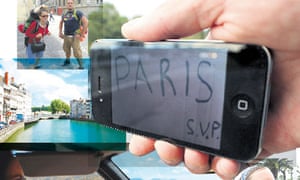
Hitchhiking around Europe (composite image)
Smartphone apps and social media have changed the way travellers approach hitchhiking


remember the exact moment that it became obvious to me that the very essence of hitchhiking had been transformed by technology. It came as we were thundering along the autoroute in the south of France. Not one moment of this long day on the road had been spent in the traditional hitching pose: waving signs or thumbs at passing motorists. Instead, I had spent a very pleasant morning back in Barcelona, using the latest generation of hitching apps and websites to set up an itinerary of interconnecting rides. All I had to do was show up and hop in.
Now, with dusk descending, I still hadn't found anywhere to stay, despite sending out innumerable requests through websites that connect travellers to kindly folk with floorspace or a couch to spare. Then I noticed an icon blinking on my phone.
"Hi, this is Emilie in Nice," read the message. "I'm happy to host you! Call when you get into town.'' A second message followed: "Hi John, I'm Karina, Emilie's flatmate. We're planning a picnic on the beach tonight. Perhaps you can come …" In an instant, I'd gone from wandering hobo to homecoming friend, thanks to the latest online travel innovations.
It certainly wasn't always like this. In the analogue 1980s, I took a year off college to hitch around Europe in search of adventure and enlightenment. Back then, not only did this involve excruciating hours by the roadside, it was also downright dangerous, with risks ranging from crotch lunges – of which I recall a few – all the way to serial killers.
Now, rides are simply posted on sites such as BlaBlaCar.com, Carpooling.com andhitchhikers.org, as well as smartphone apps such as iThumb and Rideshare4less. On Twitter, they're found using hashtags #hitchhike, #rideshare and #autostop. Hitchers book a place, or post notices saying where they want to go from and to. In return, all that's expected is a modest contribution to petrol costs, or sometimes merely company. More importantly, drivers can be checked in advance via profiles or reviews from other hitchers – making this sort of travel much safer than it used to be.
After a period of decline in hitchhiking, the net is fuelling its resurgence. So I downloaded Jack Kerouac's On the Road to my Kindle to keep me company and hit the highways, hoping to either recreate my earlier trip in a digital age, or just follow where the motorways – and websites – took me. For my maiden voyage, I settled on a ride from London to Paris, offered on BlaBlaCar by a debonair Parisian named Jean K, who, according to reviews, was de confiance (trustworthy).
As I waited with my luggage at the rendezvous point – which Jean insisted on calling "Gare de Lewisham" – I remained unconvinced that the concept would actually work. But bang on time, up rocked Jean in his Citroën C4 and we were soon blazing (as fast as a C4 can blaze) through lush French landscapes, with Bob Marley pumping from the stereo.

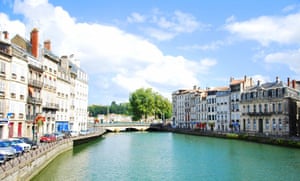
Bayonne, France

From Paris, my plan was to head towards the Atlantic coast then head south. My first ride on this leg, via Nantes to the village of Puybelliard in the Vendée region, was a rather more soulless affair. Then came my first no-show. "Annulé, annulé!" the driver barked unhelpfully when I called.
I had to revert to traditional methods. An improvised cardboard sign, scrawled with "La Rochelle, SVP" worked its magic on a trucker named Olivier and I was soon rolling into this sophisticated old port, perched vertiginously in the cockpit of the 18-wheel juggernaut.
Then – in one 343km leap – I was in Bayonne, a shuttered, half-timbered, riverfront town within easy hitching distance along the coast of the swish resorts of Biarritz and St-Jean-de-Luz.

By now weary of motorways, I was pleased to find online a ride over the Pyrenees to Barcelona, bearing a little blue autoroute icon with a strike-through – meaning that it would mostly be on precipitous B-roads.
The driver, who arrived in an explosion of laughter and messy blond hair, was an irrepressible force of nature who went by the name of Eglantine. On the run after some romantic disaster in Paris, she had spent three weeks criss-crossing Europe, staying in squats, on floors and, the previous night, in a field – information she imparted in one heavily accented stream of consciousness in the first few minutes of the journey.
Once in the mountains, we were immediately careering along slivers of swerving tarmac under a crystal-blue sky. As we crossed the border along the Pas d'Aspe – barely a crevice in the jagged peaks – I looked up to see, hovering above, the turrets of a chateau that appeared to have been carved into the rock. We hurtled into Barcelona at speeds that should have torn Eglantine's juddering Peugeot 205 apart. This had definitely been my most exhilarating lift so far.
A day later, I reconvened with Eglantine and her squatter friends to explore the city's Barrio Gótico. They all extolled the virtues of Couchsurfing.org, the website that, inspired by social networking, allows people to offer travellers a room or a sofa for free.
Until then, I had been using paid-for accommodation through sites such asWimdu.co.uk, and had stayed in some enchanting, unusual spots: a chateau in Puybelliard and a Mongolian yurt near La Rochelle. I decided to change tack, and got to work completing my Couchsurfing profile and sending out requests. But I remained sceptical – right up to the moment Emilie's message dropped into my inbox.
By the time I arrived in Nice, the picnic on the beach had been called off, but I was soon absorbed into the extended family of this pair of single mothers and avid social networkers. Next day, I was whisked off to a raucous party in nearby Cagnes-sur-Mer, where a noisy international gang had gathered to feast on Cameroonian cuisine. It was with sadness the following morning that I said goodbye to the women and their kids, amid promises to meet up in London.
Ponte Vecchio, Florence

The next ride took me via Genoa to Florence, where an eccentric gentleman named Leonardo had responded to my accommodation request. He had turned his modest flat into couchsurfing Grand Central – a Polish couple in one room, two Chinese in another, a pair of Latvians in a tent on the balcony, and me in a converted cupboard.
Next day, the Latvians – Valdis and Anita – and I stuck together. We abandoned sightseeing for drinking cheap wine in a park near the Pitti Palace. By evening, I found myself agreeing to pitch a tent on the banks of the Arno for an illegal bivouac in the heart of Florence. I woke to one of the world's most exceptional views: the Ponte Vecchio in one direction, the Uffizi in the other, with the Arno gurgling by just inches away.
I had hoped to head east – Ljubljana, Budapest, Bratislava – but rides never materialised. Instead, I travelled overnight to Munich through the velvety black outline of the Alps.
Then it was on to Prague, Berlin and Paris, and finally back across the Channel. I was dropped right on my doorstep in Blackheath, south London, at 4am. In 26 days I had covered 5,759km and taken 21 separate rides. The petrol-share costs had been €375 – making this by far the cheapest way to traverse Europe.
While some of the sense of adventure is lost if you organise lifts in advance, this was still one of the most momentous trips I've ever taken. With two or three hitchers per car, it is more social and infinitely safer than the traditional way. I'm sure that Jack Kerouac would have approved of – and used – Couchsurfing and the hitching sites, had he been around today. The age of e-thumb has definitely arrived.
• Car-sharing costs were covered by BlaBlaCar (blablacar.com). Accommodation was provided by Wimdu (wimdu.com)

Five of the best sharing economy apps and sites for travellers

From kinky holiday lets to dining in private homes or hiring skis, we recommend the best peer-to-peer apps and sites for travellers

Kinkbnb

Value a dungeon as much as Wi-Fi in a holiday let? Kinkbnb, new last year and calling itself “sex positive Airbnb”, is for you. Hosted by and for fellow kinksters, it lists properties with sex toys and sex furniture, as well as ones described as swinger- or orgy-friendly.

Airdine/EatWith

People at dinner
Launched in Sweden this week and going worldwide this year, Airdine turns homes into pop-up restaurants. Hosts can make extra cash serving home cooking; guests get to meet new people. A similar site, EatWith, vets its chefs before they can list on the site.

Dogvacay/Borrow My Doggy

White labradoodle
Pinterest
 Photograph: Alamy
It’s not all about you, you know. Dogvacay, currently only in the US, provides a platform for owners to find pet-sitters while they go on holiday. In the UK,Borrow My Doggy has a big community of dog lovers to provide a friendly alternative to kennels.

Spinlister

Young woman with bike
Pinterest
 
Whether you like to ride roads, waves, or snow, Spinlister is the leading peer-to-peer site for renting bike, surf and ski or snowboard gear. Available in over 100 countries, the simple platform is a great way to hire your sports gear – and connect with locals.

Campinmygarden

Tent in garden
Airbnb for, well, gardens, Campinmygarden helps campers find super-cheap pitches on private lawns. Launched in 2010, it has 800 spots, from tiny backyards to landscaped grounds. Think beyond rural England, though: the site lists locations as far afield as Tonga, Fiji and Jamaica.

MyShake App Turns Smartphones Into Earthquake Detectors, Warning Devices

MyShake app developers point to the fact there are only a handful of traditional seismic detectors and geodetic networks around the world. On the other hand, smartphones are much more prevalent, and their accelerometers can be tapped to detect earthquakes.
MyShake
MyShake has been reportedly downloaded by 70,000 users worldwide. (Photo : Twitter/AAAS)

Smartphones are becoming more than just communication and entertainment devices, as they have started to serve more practical functions such as a disaster detection device. Developers, for instance, have teamed up with seismologists and unveiled an app Friday called MyShake that effectively transforms smartphones into earthquake detectors.
Unlike the elaborate infrastructure seen in theShakeAlert system, MyShake only relies on the smartphone's accelerometer to detect quake activity. Its algorithm allows the app to estimate the earthquake's location and magnitude, CBS News reported. This information is then forwarded to a central database, where seismologists analyze data real-time. 

"We show that smartphones can record magnitude 5 earthquakes at distances of 10 km or less and develop an on-phone detection capability to separate earthquakes from other everyday shakes," the app's developers explained in a paper published in the journal Science Advances.

"We show that smartphones can record magnitude 5 earthquakes at distances of 10 km or less and develop an on-phone detection capability to separate earthquakes from other everyday shakes," the app's developers explained in a paper published in the journal Science Advances.

What Happens Now That We Know Gravitational Waves Are Real?


Last week, physics had a rare moment in the headlines after scientists announced they had made the first direct observations of gravitational waves, ripples in the fabric of spacetime predicted by Albert Einstein’s theory of general relativity. It was an astounding technological and scientific feat, decades in the making. Taking a page from our colleagues on the politics desk, who gather round to chat regularly, we asked some of our favorite astrophysicist-types to join us for a chat about the waves, what they mean for science, and what may come next.
Our participants:
  • Christie Aschwanden: Lead science writer at FiveThirtyEight.
  • Alan Lightman: Physicist, novelist and professor of the practice of the humanities at the Massachusetts Institute of Technology. His most recent book on science is “The Accidental Universe.”
  • Katie Mack: Theoretical astrophysicist at the University of Melbourne, researching dark matter, particle physics and the early universe.
  • Derek van Westrum: Physicist with NOAA’s National Geodetic Survey, specializing in terrestrial gravity measurements and their applications.
  • Christie: The big gravitational wave announcement happened about a week ago now, and the hoopla has mostly died down. I’ve gathered you all here today to discuss what’s next. How does this discovery frame our thinking about the universe? And where will it take us? What can we do now that we couldn’t do before?
    Alan: No one doubted the existence of gravitational waves. We absolutely but indirectly inferred their existence with the binary pulsar a couple of decades ago.
    Katie: And that won a Nobel Prize!
    Alan: Yes, the new discovery — the direct detection — will also win a Nobel, probably for Thorne, Weiss and Drever. [That’s Kip Thorne, Rainer Weiss, andRonald Drever, the founders of the Laser Interferometer Gravitational-wave Observatory (LIGO) that detected the waves.]
    Christie: So given that this is anything but a surprise, what makes it such a big deal? And, maybe what I’d like to know even more: Why has this captured our imagination?
    Derek: I think it’s literally a whole new kind of telescope. We can “see” (or maybe “hear” is better) things that were invisible before.
    Alan: Better to use “hear” than “see” because this is not electromagnetic radiation, like light and X-rays. It is the vibrations of space, more like sound waves.
    Katie: I think that the discovery, as a discovery, is immensely exciting. But the part that makes this thing game-changing and truly revolutionary is that it’s the start of gravitational wave astronomy. An entirely new field!
    Christie: So a new tool AND a new field!
    Katie: Yes, absolutely.
    Alan: It’s a big deal for at least two reasons. As Derek says, it is a new kind of telescope. But also, it is a triumph of technology. It is the most sensitive instrument ever created by humankind. We will be able to see things we couldn’t see before — like oscillating black holes, quiet supernova, lumps in the early universe.
    Katie: Up until now, we’ve been able to observe the universe with light and with certain kinds of cosmic particles. But this is fundamentally different — we’re looking at spacetime itself.
    Derek: As an instrumentalist myself, that was the truly astonishing part. That this thing remotely worked! It’s incredible technology.
    Katie: Yeah, the technological achievement is mind-blowing. I also love how much just came together perfectly for this. Until a decade or so ago, we didn’t have reliable simulations of black hole collisions. People had tried to get black holes to merge in numerical simulations and had to fudge something or the code would break. It was only in something like 2005 that a simulation was really successful, and what LIGO saw was pretty muchexactly what the simulations predicted.
    Alan: That was only a problem with the simulations, We knew that black holes would have to spiral in and merge.
    Christie: I love the idea that we can use this to hear the early universe.
    Derek: So I’ll let you both go for it on the astronomy side of things, but there is a separate chapter to Christie’s question: Are there important outcomes of this closer to home?
    Alan: Closer to home might be a matter of coaxing the National Science Foundation and the National Institutes of Health to fund long-term projects without immediate payoff.
    Derek: I would just add, as a taxpayer, I would pay cold, hard cash to know that the equivalent of three solar masses “disappeared” into gravity waves, and that was brighter than the visible universe. Incredible. But, that may just be me.
    Alan: I wish all taxpayers were like you.
    Christie: Me too!
    Katie: I’m not sure how universal that is, but I definitely think there will be spinoffs to both the technology and the discovery itself that will have benefits we can’t even imagine yet.
    Alan: Certainly to the technology. But I don’t think we need spinoffs to justify this. It is the same as justifying ballet.
    Katie: I don’t need spinoffs to justify this, but it doesn’t hurt to point out to taxpayers that fundamental physics leading to new technology is a long and proven tradition!
    Derek: That’s what I found so interesting about this particular announcement: It’s mind-blowing in itself, but if you wanted to “justify” it in terms of an investment, there really are things we can point to in the sensors that will have great payoffs. In manufacturing, for example.
    Christie: I’ve noticed that gravitational waves seem to have captured the public’s imagination in a way that many basic science discoveries don’t. Do any of you have theories as to why?
    Alan: For one thing, people love black holes, like dinosaurs. Also, the scientists were very very media savvy and orchestrated this with the press for months in advance.
    Katie: I think a lot of people are picking up on how excited the physicists are, so that might be part of it. (I mean everyone I know who is involved in this stuff is positively giddy.) But also, people love black holes. And spacetime.
    Derek: And they made it audible!
    Katie: *chirp!*
    Alan: Yep. But when we detect much bigger black holes, they won’t be audible.
    Christie: Yeah, I couldn’t stop listening to the chirps!
  • Derek: I still like to think of them like whale songs …
    Katie: One of the things that makes this exciting for me is that it’s evidence of a massively violent event in the distant universe, but we’re not just seeing some vague image in the telescope. The instrument is actually being deformed by the gravitational waves. This is gravity coming to your house and moving your stuff.
    Alan: Everything about this discovery is theatrical: 40 years in the making, generations of grad students, two 2.5-mile long tubes, black holes, audible signal.
    Christie: Alan, do you think there’s a novel in here?
    Alan: There is certainly a movie in this. Janna Levin is about to come out with a nonfiction book on LIGO, where she interviewed all of the principals.
    Derek: And Alan — it comes ~exactly 100 years after Einstein thought of it
    Alan: Yes, that’s another part of the theater. It was made for Hollywood, but it’s serious stuff.
    Katie: Everybody loves a story about Einstein being a genius.
    Christie: Einstein had some uncertainty about gravitational waves, right?
    Alan: Yes, he did. He thought that the wiggles might be wiggles of the coordinate lines, like wiggling latitude lines on a globe, rather than real wiggles in space.
    Christie: Does this feel like a moment that will give physics some propulsion in the coming years? Not just for those in the field, but in the public’s mind? Do you expect this success will make it easier to get funding for the next big project?
    Derek: I think this gets back to “justifying the ballet.”
    Christie: Yeah, we shouldn’t have to! But the reality is, we do.
    Katie: I think this will definitely give the LISA project some propulsion. (Possibly literally.)
    Derek: The thing that it isn’t obvious at first is that this project is actually relatively easy to point to as an investment: The techniques with quartz fibers and interferometers will be very useful in all types of manufacturing. And talk about delayed payoff: 100 years after general relativity was invented, there are practical uses for it.
    Katie: There are lots of examples of delayed payoffs from obscure fundamental physics. Antimatter has led to PET scans, quantum tunnelling to certain kinds of transistors, etc.
    Alan: Yes. The history of science is full of pure ideas and discoveries that then turned out to have practical application.
    Derek: Just imagine if LIGO never worked! *gulp*
    Alan: Robert A. Heinlein wrote a book about a society that prided itself in funding projects that wouldn’t succeed for 100 years. Unfortunately, the society kept messing up, and the wild-idea projects had practical applications within a few years.
    Derek: That is worth a try
    Christie: Last year I wrote about this theory of creativity that says that following interesting ideas and seeing where they lead you results in bigger payoffs than working toward a concrete goal. Seems true of science too.
    Alan: That to me is a big implication here. Our national funding agencies, like NSF, NIH, etc., need to put money into pure research even if they cannot see an immediate payoff.
    Katie: Yes, that’s hugely important. It’s easier to think outside the box if you ignore the box entirely.
    Alan: Actually, gravitational waves, among all other waves, can penetrate the box, any box.
    Christie: Yeah, this looks like a brilliant example of the payoffs of basic research, which you can never predict in advance.
    Derek: I’m with you, but as devil’s advocate: If LIGO was just a continuous disaster, never producing results, we’d be having a different conversation right now, for sure.
    Alan: I don’t think LIGO could have been a continuous disaster. We knew from theoretical calculation the likely sources of gravitational waves, the likely strengths, and we knew how sensitive the device had to be. We slowly but steadily worked towards that sensitivity.
    It’s not like when we searched for the decay of the proton, where we weren’t sure of the underlying theory.
    Christie: I wonder though if it would be helpful to science if funders could embrace failure a little more. Sometimes it’s the best teacher.
    Alan: Totally agreed. You have to risk failure to get results, certainly results like this one. There is a saying in Bridge, the card game: If you don’t lose half your slam bids, you are not bidding them often enough.
    Derek: That’s a good point, and I’d say it speaks to the quality of the funding agencies: They seem to be able to recognize a plausible, even if difficult, idea. At least that’s my impression. It sounds like maybe you think they could be more daring?
    Christie: So, Alan, how could funders adopt an approach that’s not afraid to fail?
    Alan: Well, none of us are saying that funders should support failure. But we are saying that funders should take some chances on longer bets and not always be looking for quick payoffs. Funders should support very solid and dedicated scientists who they trust, like Thorne, Weiss and Drever.
    Derek: I’d add that sometimes, if it’s “reasonable,” you can try things where you expect one outcome, but another would open lots of new science. The ether is the classic example: They all expected it to be there, and when it wasn’t, voila! Way more interesting stuff …
    Katie: Funders should also support new investigators and new ideas, though. Can’t always be just the top established people. There’s a lot to be said for funding experiments based on expected value, right? High risk but high reward experiments are just as important as stuff that’s almost certain to pay off but isn’t revolutionary.
    Christie: Katie, do you think this could inspire a new wave of physicists?
    Katie: I definitely think young people will be inspired by this. Black holes and warped spacetime were the kinds of things that got me excited as a kid.
    Alan: The astonishing thing is that the physical event was so clean. Two black holes spiraling into each other is far neater and more predictable than a black hole and a neutron star, for example.
    Derek: Were there other, messier events that probably generated gravitational waves, but we just can’t tell? What are the chances that the “first” was so perfect? And from a direction where the Louisiana detector could so clearly ”hear” it first.
    Alan: I believe that LIGO has been picking up other, smaller and messier events. Nothing is as clean as two black holes spiraling into each other. You don’t have to know anything about the crust of a neutron star, etc.
    Christie: So we’re running out of time. Shall we wrap up with a few final thoughts?
    Alan: It’s a great day for science, and the human civilization that has produced our science.
    Derek: Agreed — this is an amazing achievement that is beautiful, interesting and will surely lead to things we can’t imagine now.
    Katie: It’s the start of a whole new era — a new branch of astronomy! (I’ve been saying that a lot over the past few days, but it’s not at all an exaggeration.)
    Alan: We are back in the time of Galileo, but looking forward.
    Christie: Thanks so much for your time, all. It was a delight to have you here.
    Alan: Until the next black hole collision!